A breeder's honest guide to the three ways people bring home a new puppy, and what each one really means for your family.
If you’ve spent any time browsing for a puppy, you’ve probably noticed that not all puppies come home at the same age, and not all of them come home with the same price tag. Over the years, I’ve talked to hundreds of families who came to us with very different ideas about what they wanted. Some want to start from day one. Some want a dog that already knows a few commands. And occasionally, someone falls in love with an older puppy that’s been waiting a little longer than expected for the right family.
All three options are real, and all three have a place. But they are not the same thing, and understanding the differences before you decide can save you a lot of confusion and heartache. Let me walk you through each one from the perspective of someone who has been doing this a long time and cares deeply about how these puppies land.

Option 1: The Classic 8 to 10 Week Old Puppy
The prime socialization window...
This is the gold standard, and there’s a reason it’s been the standard for generations of dog breeders and families.
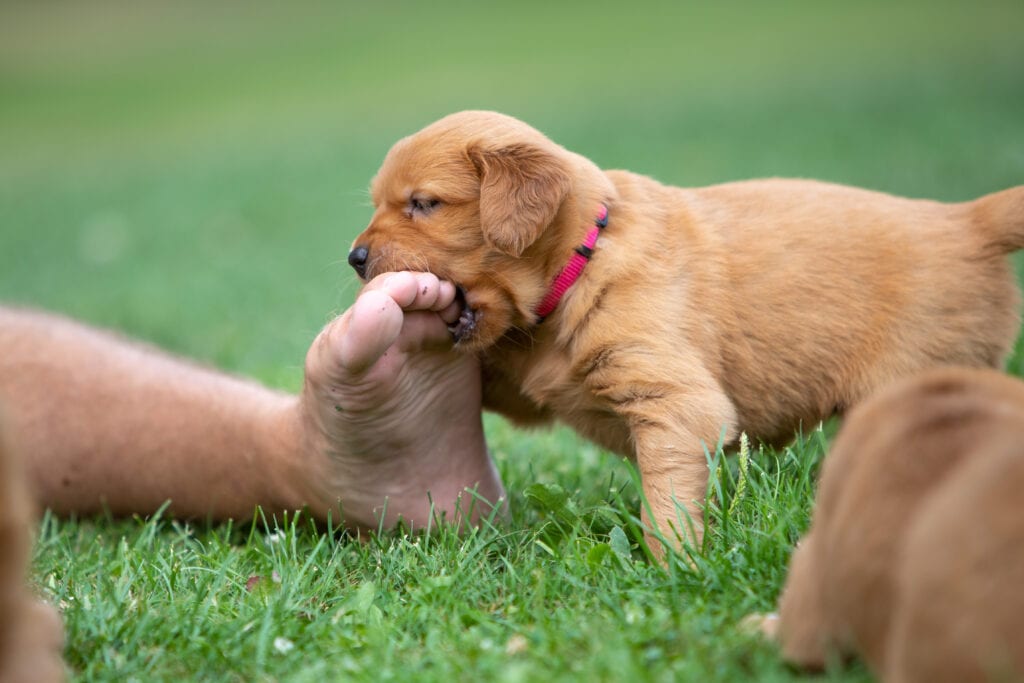
At 8 to 10 weeks old, a puppy is in what experts call the prime socialization window. Canine behaviorists at the AKC and universities like UC Davis have documented this period extensively. Puppies have a prime socialization period between roughly 3 to 12 weeks of age. During this time, their brains are highly receptive to new experiences. This is the window when bonding happens most naturally, when new sights and sounds are absorbed with curiosity instead of suspicion, and when a puppy slides into your family almost like they were always meant to be there.
Eight to ten weeks is the age at which most breeders send puppies to their new homes, and puppies are still programmed to be happy and curious about everything that is new. That last part matters. A young puppy hasn’t developed enough of a “map” of the world yet to feel like your home is foreign or wrong. They just start writing the map from scratch, and your house becomes home very quickly.

Socialization begins on the farm...
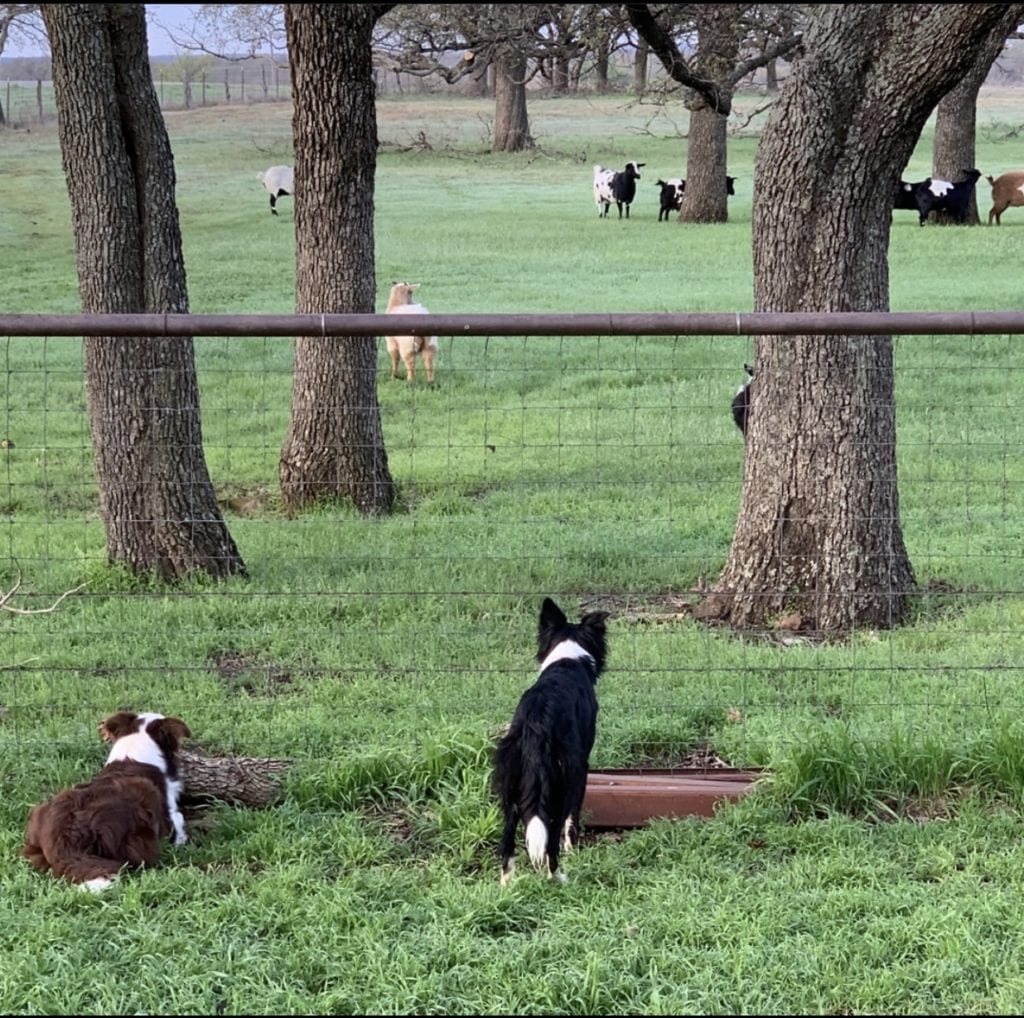
Here at Lost Creek Kennels, our puppies don’t just sit in a kennel waiting for their birthday. They spend those early weeks alongside goats, chickens, ducks, and all the sounds and smells of a working Texas farm. Our puppies are raised on a farm, well socialized, happy and sweet, and every puppy gets individual attention and love. So by the time an 8-week-old puppy arrives at your front door, we’ve already poured the foundation. You’re just picking up where we left off.
The Blank Slate Is the Best Part
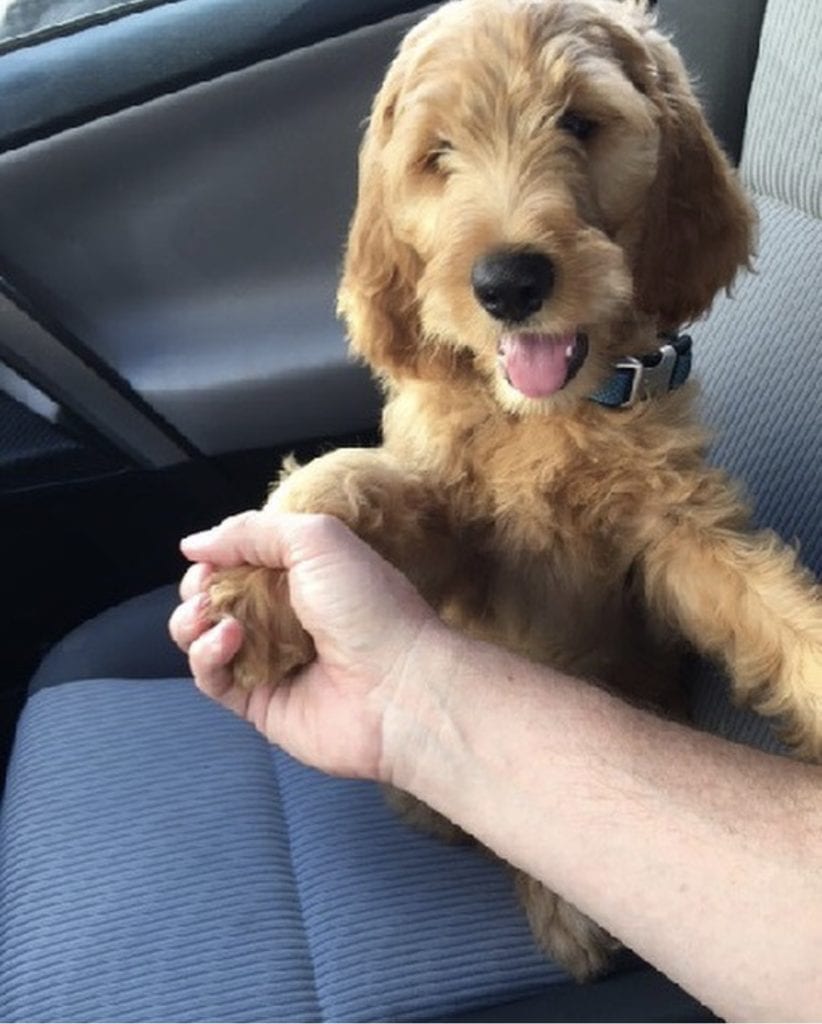
One important thing to understand: the 8-to-10-week puppy does still need training at home. They are not potty trained. They will chew things, and yes, there will be accidents. But that’s not a flaw. That’s the point. You get to shape them. You get to be the center of their world from nearly the very beginning. And these pups are intelligent and most are exceptionally teachable dogs to work with…so it can be a lot of fun! (Click here to see Franklin the Bordoodle, agility champion, in action!)
This option is our most popular, and honestly, it’s the one we recommend most often if your schedule can accommodate a puppy in that early phase of life.
Option 2: The Older Puppy (The One That Waited)
Every once in a while, a puppy just doesn't find their family on the usual timeline.
A reserved family has a change in plans. A puppy gets passed over for a different color or a different gender. Life happens, and suddenly there’s a five-month-old puppy who is still waiting for a home.
We want to be completely honest with you about what this means.

At around 15 to 20 weeks and beyond, a puppy’s socialization window is closing. The most critical socialization window occurs before the age of 12 weeks, and that window is considered to be closing by 5 months. Socialization is a time-sensitive procedure. That doesn’t mean all is lost, not even close. But it does mean the transition to a new home can be a bit more of an adjustment than it would be with a younger puppy.
Reality at the farm for an older pup...
Here’s the reality from my end of it. An older puppy on the farm has, by necessity, become part of the pack. They spend more time outside with the other dogs, they get a little less one-on-one attention, and they’ve started to develop a sense of routine and belonging right here. When they leave for a new home, they’re old enough to actually notice that something has changed. A younger puppy at 8 weeks barely registers the transition. An older puppy at 5 months knows something is different.
That’s not to say they don’t adapt. They absolutely do. But there’s often a settling-in period that takes a little more time and patience than you might expect from a puppy their age. And they still need to be trained. Potty training, leash manners, basic commands, all of that work is still ahead of you, because that older puppy has just been being a dog. A happy dog, a well-cared-for dog, a loved dog, but not a trained one.

I hear this question more than you might think: "Is she trained?"
And when I explain that she’s not, and that training is a separate category entirely (more on that in a moment), the conversation gets interesting. We typically offer older puppies at a reduced price to reflect its age. That discount is real and meaningful. But the work that comes with bringing that puppy home is just as real. They can still become a wonderful dog. Many of our families have given older puppies beautiful second chances and never looked back. It just requires the right family, one with patience, consistency, and a little extra grace during the first few weeks.
Fear periods. They're normal.
Puppies generally experience their first fear period around 8 to 11 weeks, and a second fear period can be especially disorienting for owners because their 6-to-14-month-old may look like an adult dog. If you bring home a 5-month-old puppy, you may find yourself right at the edge of that second developmental window, which means some seemingly out-of-nowhere anxiety or hesitation as they adjust to a new place. Understanding that this is normal, not a problem with the dog, goes a long way.
The bottom line on the older puppy: they can be a fantastic choice for the right family. They’re often significantly discounted. They’re still loving, still brilliant, and still capable of becoming exactly the dog you hoped for. They just need more from you upfront.
Option 3: The Professionally Trained Dog
This is the category that a lot of people think they're asking about when they inquire about an older or discounted puppy. They are not the same thing.
A professionally trained dog or puppy has spent time with a certified trainer learning real, functional obedience. We’re talking about sit, stay, place, come, and walking politely on a leash. These are not tricks. They are life skills that take weeks of dedicated professional work to install properly. Basic obedience-trained puppies typically cost between $3,000 and $8,000, with advanced training raising prices to $5,000 to $20,000, depending on the breed, training level, age, and breeder reputation.
That’s a wide range, and there’s a reason for it. Professional training is a significant add-on to the base price of the puppy, not a substitute for a lower price. Board-and-train programs, where a dog stays with a trainer for a set period, cost on average $500 to $1,500 per week, with the average stay running three weeks or longer. By the time you factor in the puppy itself, the weeks of professional work, and the care involved, a trained dog is a premium product at a premium price. It is not the same as an older puppy that was simply not placed on time.
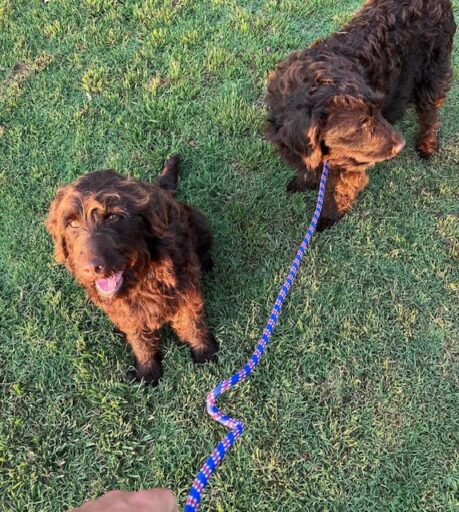
A trained dog can follow commands. It walks on a leash. It has learned how to learn. That is worth something significant, and the price reflects it.
For families who genuinely cannot spend the time required to train a puppy from scratch, this option can be a wonderful fit. For families who are attracted to the lower price of an older, unreserved puppy that they hope comes with training already done, I want to set those expectations clearly and kindly: it does not. The price reduction reflects age, not preparation.
So Which One Is Right for You?
Here's the simplest way I know to think through it.
- If you have the time, the patience, and the desire to bond deeply with a puppy from nearly the very beginning, the 8-to-10-week puppy is your answer. You’ll do the training work, but you’ll also get the full experience of watching that puppy become yours. This can be a genuinely rewarding experience.
- If your budget is the primary factor and you’re prepared to put in the effort during the adjustment period, an older puppy at a reduced price can be a meaningful opportunity. Just go in with realistic expectations and a heart full of patience. The dog will feel it, and you’ll be rewarded with a loyal, loving companion.
And if you want a dog that already understands the basics and you’re prepared to invest accordingly, a trained dog might be exactly what your family needs. It’s a luxury, but for some households, it’s the right luxury.
Ultimately...
We love all three of these dogs. We care about all of them. And we want them in homes that are set up to love them well, whatever that looks like for your family.
If you have questions about what’s currently available at Lost Creek, or you want to talk through which option makes the most sense for your situation, just reach out. You can view our available puppies by clicking here, or text us directly at (940) 351-0047. We’re real people out here on a real farm, and we’d love to talk dogs with you!